
Category
Date
Author
What Stayed With Us
Kassandra Valdivia
Super Nature at the Art Gallery of New South Wales considers our tendency to place the natural world somewhere beyond ourselves.
We go into nature. We preserve it, cultivate it, document it and return to it. Even the language creates a distinction between the human world and a natural one that begins somewhere at its edges.
Super Nature starts from a different position: humans as inseparable from natural systems, dependent on them, implicated in them and continually altering them.
Across the exhibition, that relationship takes many forms. Some are physical and immediate; others sit in the ways we frame, organise and assign meaning to the natural world.
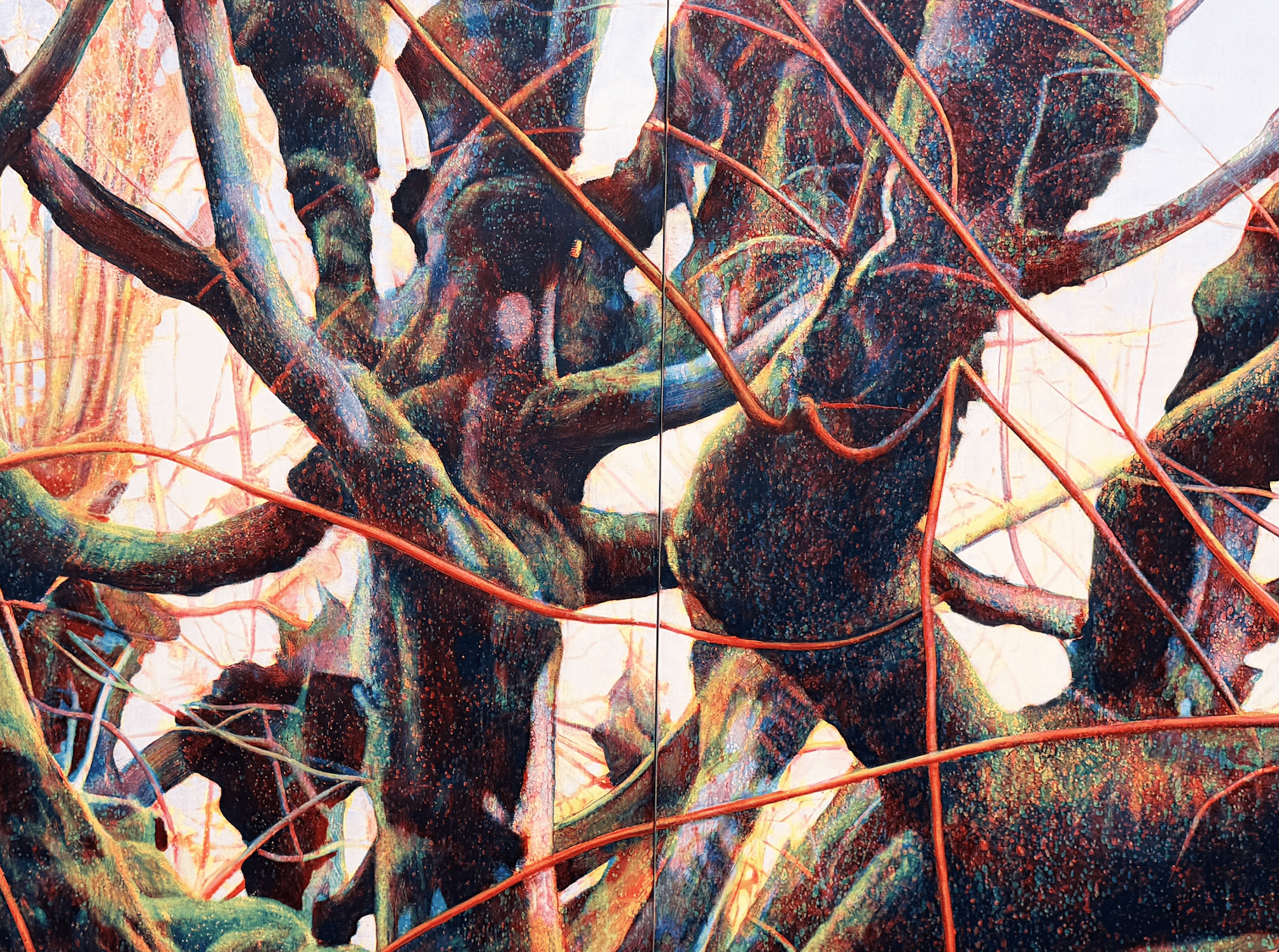
Tim Maguire’s Untitled 20081003 (2008) traces human intervention through the life of the tree itself. Its enormous trunk and branches bear the evidence of years of pollarding alongside continual regrowth. Human action becomes part of its physical history, recorded in a form that continues to grow beyond it.
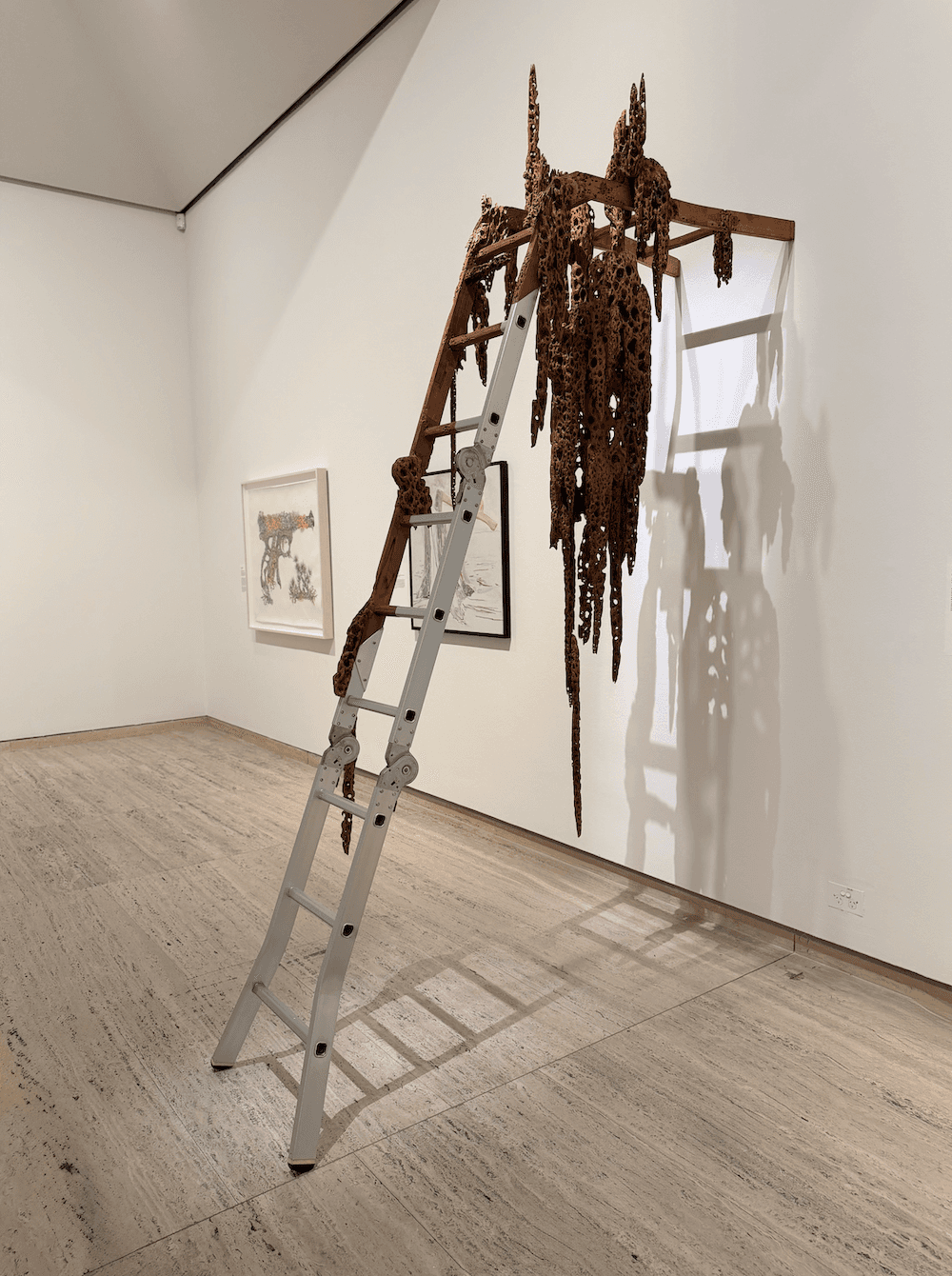
Nicholas Mangan’s Untitled (nest) (2004) pushes that entanglement into stranger territory. A readymade aluminium ladder supports long, nest-like forms that appear to drip from its structure. The manufactured and organic occupy the same object so completely that the boundary between structure and growth begins to blur.
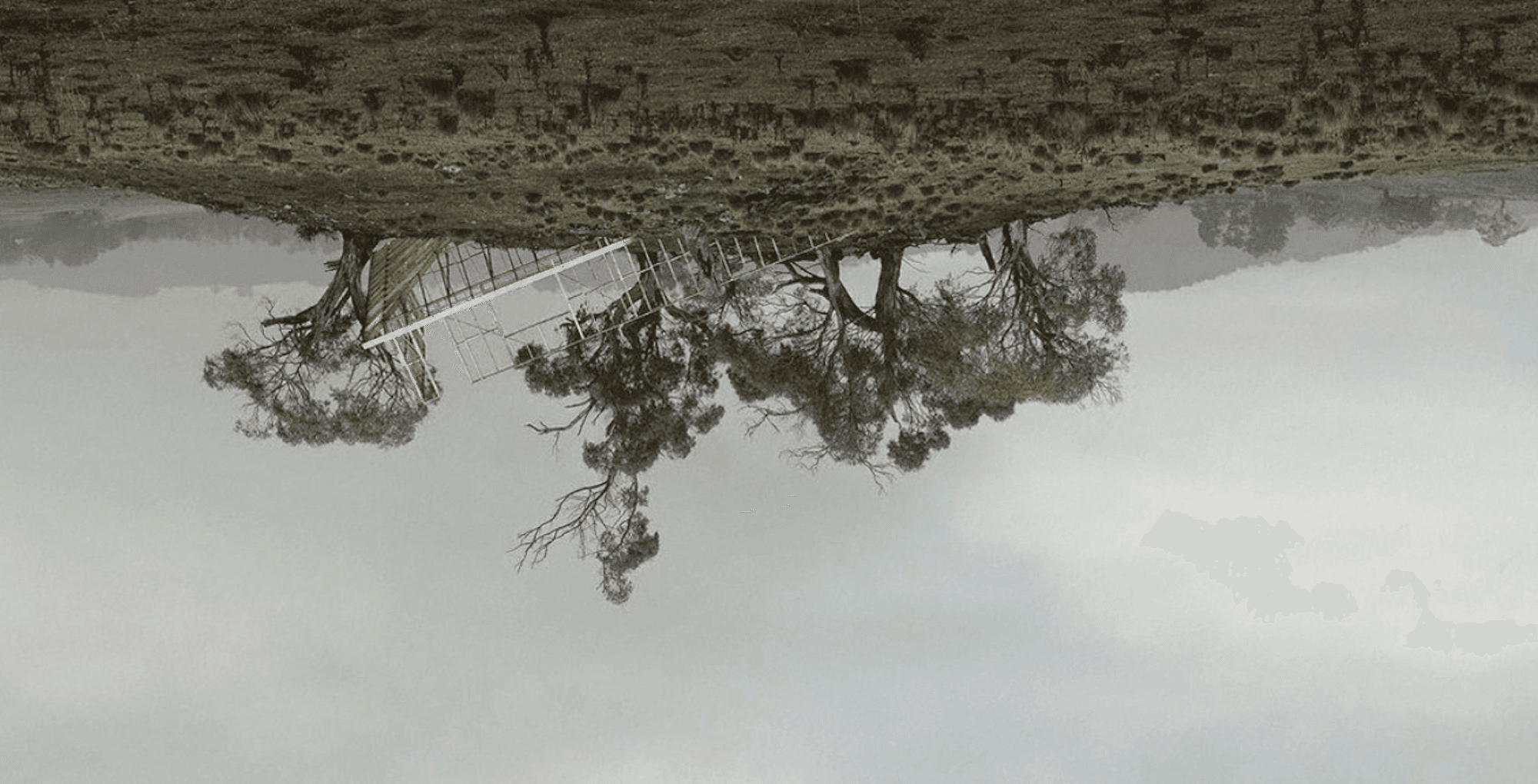
Rosemary Laing’s Eddie (2010) shifts the relationship towards perception. Its inversion makes the terrain difficult to settle into, drawing attention to how readily our understanding of landscape is shaped by the position from which we view it.

The impulse to organise the natural world takes on another dimension in Joan Ross’s I give you a mountain (2018). Drawing on an eighteenth-century watercolour commissioned to catalogue a collector’s specimens, Ross connects histories of collecting and classifying wildlife with contemporary systems of consumption. In the closing sequence, two figures and the mountain itself begin to dissolve, leaving the structures of ownership and control feeling far less permanent than they first appear.
Together, these works make the boundary between human and natural increasingly difficult to hold in place.
We shape natural systems while remaining entirely dependent on them. We construct ways of seeing them, organise them around human needs and live within processes that continually exceed our control.
How we understand our place within those systems and the degree to which we imagine ourselves separate from them, sits at the centre of Super Nature.


